SPD
SPD Manufacturer — AC & DC Solar Surge Protective Devices
TPKELE manufactures surge protective devices (SPDs) for AC distribution and DC photovoltaic systems. Our AC SPD line covers Type 1, Type 2 and Type 1+2 protection per IEC 61643-11; our DC SPD line is built specifically for solar with 600V / 1000V / 1500V Uoc options per IEC 61643-31. Pluggable modules, visual status windows and remote signaling make field service simple — the trusted surge protector choice for solar EPCs, panel builders and distributors.
- AC SPD: Type 1 / Type 2 / Type 1+2 for distribution panels and inverters
- DC SPD: 600V / 1000V / 1500V Uoc for PV combiner boxes and inverter DC sides
- 20kA / 40kA Imax (8/20μs), Up ≤ 1.5 kV
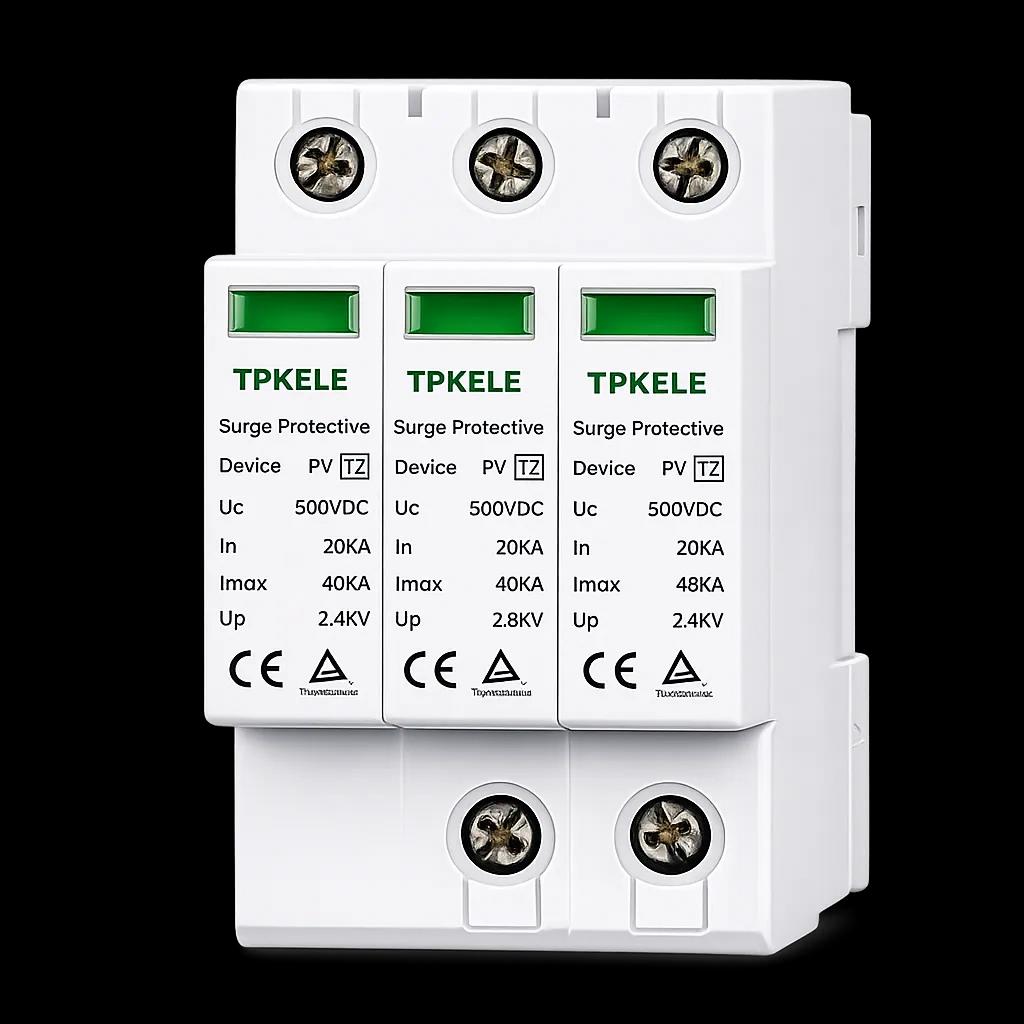
SPD Product Lines
AC SPD
TPKELE AC SPDs protect low voltage distribution boards, telecom cabinets and inverter AC outputs against lightning surges and switching transients. Available as Type 1, Type 2 and Type 1+2 modules with pluggable cartridges, visual status indicators and remote signaling — compliant with IEC 61643-11 for European, Middle East and Southeast Asian project tenders.
View AC SPD →DC SPD
TPKELE DC SPDs protect photovoltaic systems and DC distribution against lightning-induced surges. Designed for PV string inputs, DC combiner boxes and inverter DC sides, they support Uoc up to 1500V DC with Type 1+2 / Type 2 protection levels and clear visual status windows. The trusted PV surge protector for solar EPCs, distributors and OEM buyers worldwide.
View DC SPD →Frequently Asked Questions
Which SPD type do I need for a solar PV project?
PV strings, combiner boxes and inverter DC inputs require DC SPDs sized to the system Uoc (600V / 1000V / 1500V). Inverter AC outputs and the building distribution board use AC SPDs (Type 2 standard, Type 1+2 if direct lightning exposure is possible).
What is the difference between Type 1, Type 2 and Type 1+2?
Type 1 (10/350μs waveform) protects against direct lightning strike currents at the building entrance. Type 2 (8/20μs) protects against induced surges downstream. Type 1+2 combines both — used at the main distribution board when a lightning protection system is present.
What does Imax / In mean on an SPD?
In = nominal discharge current (8/20μs) the SPD can pass repeatedly. Imax = maximum one-shot discharge current the SPD can handle once and remain functional. Choose In/Imax based on lightning exposure and project specs.
Are TPKELE SPDs CE certified?
Yes — all SPDs comply with CE, RoHS and IEC 61643-11 (AC) / IEC 61643-31 (DC PV). Test reports are available for project files and tenders.
Do you offer SPDs with remote signaling output?
Yes, selected models include a remote signaling contact (NO/NC) so you can monitor SPD health from a central control system or BMS.
What is the difference between Type 1 SPD and Type 2 SPD?
Type 1 SPDs (tested with 10/350μs impulse current) protect against direct lightning strike currents at the building service entrance. Type 2 SPDs (tested with 8/20μs waveform) protect against induced surges downstream in distribution boards. Type 1 is installed at the main incomer where lightning protection system (LPS) is present; Type 2 is standard for sub-distribution boards. Type 1+2 combined devices are available where both functions are needed at one location. Read our complete guide: Type 1 SPD vs Type 2 SPD selection.
Do I need both AC SPD and DC SPD for a solar PV system?
Yes — solar systems require protection on both DC and AC sides. Install DC SPDs rated for the system open-circuit voltage (Uoc) on PV strings, combiner box outputs and inverter DC inputs. Install AC SPDs (Type 2) on the inverter AC output and the building AC distribution board. DC SPDs must be sized to the PV system voltage (600V / 1000V / 1500V Uoc); AC SPDs are selected based on the AC system voltage (230V / 400V). View our DC SPD series for PV applications.
How do I know when an SPD needs replacement?
TPKELE SPDs feature a visual status window (typically green = OK, red = replace) for quick field inspection. Selected models include a remote signaling contact (dry contact, NO/NC configurable) that changes state when the SPD fails, allowing integration with BMS or alarm systems. Pluggable cartridge designs allow fast field replacement without removing the base unit. Check SPD status during routine maintenance — a failed SPD offers no protection and should be replaced immediately.