PV Combiner Box
PV Combiner Box Manufacturer — Plastic & Metal IP65 Series
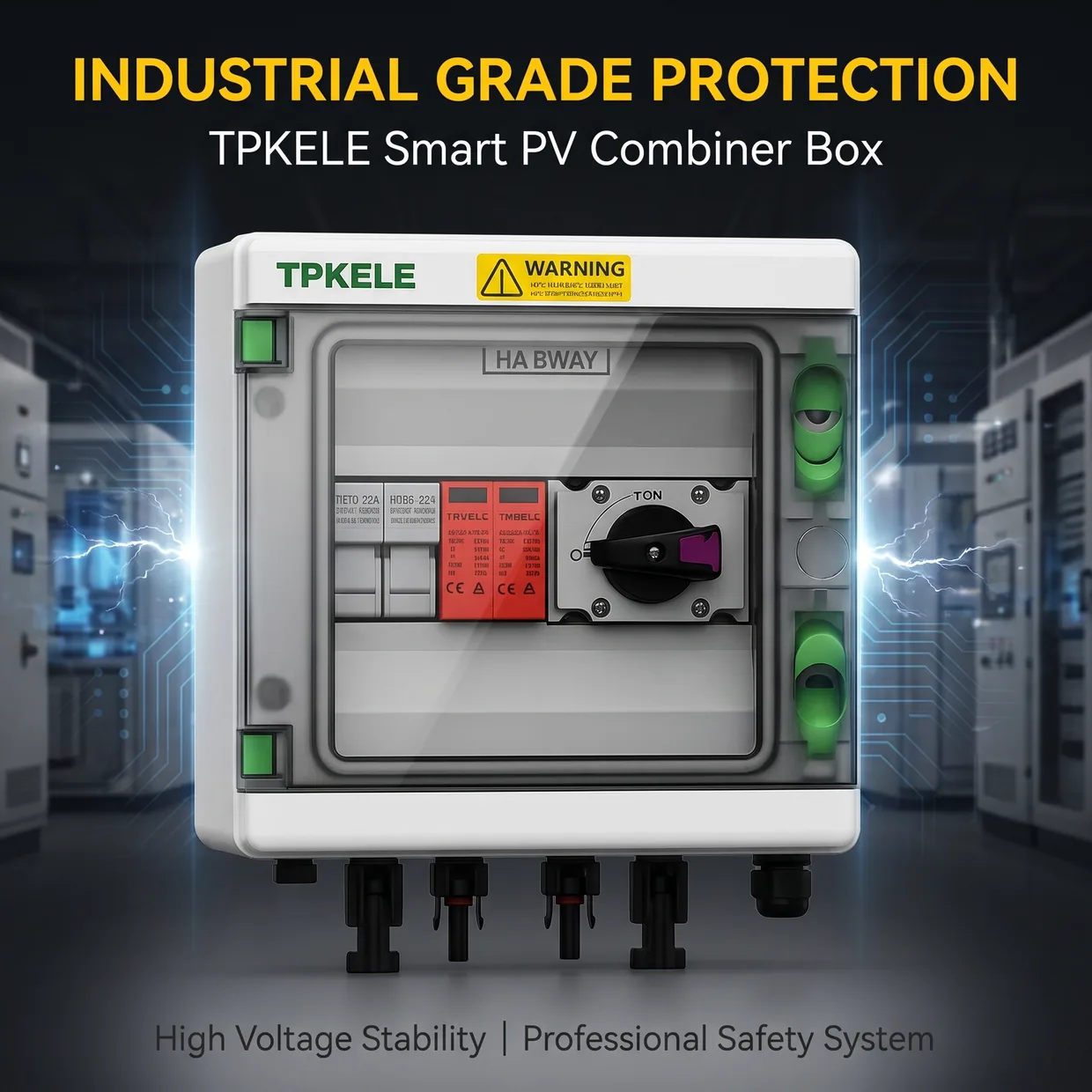
TPKELE PV combiner boxes aggregate solar strings and integrate DC fuses, DC SPDs and DC MCBs in IP65-rated enclosures. Plastic and metal series cover residential rooftop to utility-scale PV with 2 / 4 / 6 / 8 / 12 / 16 string inputs, 1000V / 1500V DC ratings and configurable single-line diagrams. Trusted by solar EPCs, panel builders and distributors across Europe, the Middle East, Southeast Asia and South America.
- Plastic and metal PV combiner box series — IP65 outdoor rated
- 2 / 4 / 6 / 8 / 12 / 16 string input configurations
- 1000V DC / 1500V DC system options
Need a DC distribution, AC distribution or ATS box built to your drawing?
View all distribution boxes →Frequently Asked Questions
Plastic or metal PV combiner box — which should I choose?
Plastic boxes are lighter, fully corrosion-resistant and ideal for residential and rooftop projects. Metal boxes provide greater mechanical strength, better heat dissipation and are common in utility-scale and harsh environments such as desert or coastal sites.
What system voltage do your combiner boxes support?
We offer both 1000V DC and 1500V DC versions. 1500V DC is now the standard for utility-scale PV due to lower BOS cost.
Do combiner boxes include SPD, fuse and breaker?
Yes — our standard combiner boxes are pre-assembled with DC fuses, DC SPDs and DC MCBs. The configuration is adjusted to match your project single-line diagram.
Do you provide drawings and BOMs for tender packs?
Yes — we provide CAD drawings, single-line diagrams and BOMs in formats suitable for EPC tender submissions and engineer review.
What is the standard IP rating?
Standard rating is IP65 for outdoor use. IP66 is available on request for harsh environments.
What is a PV combiner box and why is it needed?
A PV combiner box aggregates multiple solar strings (parallel-connected) into a single DC output that feeds the inverter or charge controller. Each string input has a DC fuse (or DC MCB) for overcurrent protection, a blocking diode (optional, less common in modern designs), and shared DC SPD for surge protection. The combiner box simplifies wiring, reduces cable runs, and provides a single inspection and isolation point — required by most electrical codes for arrays with more than 2 strings.
How many strings can a PV combiner box handle?
TPKELE PV combiner boxes are available in 2 / 4 / 6 / 8 / 12 / 16 string input configurations. Residential rooftop systems (2–10kW) typically use 2–4 string boxes. Commercial rooftop (10–100kW) uses 4–8 string boxes. Utility-scale ground-mount (MW+) uses 12–16 string boxes per inverter or array section. The string count depends on the array layout, inverter MPPT inputs and site design — consult your electrical drawings or contact us with your project single-line diagram for configuration recommendations.
Do I need DC MCB, DC fuse, or both inside the combiner box?
Standard practice: install either DC fuses or DC MCBs per string input (one per string positive conductor), not both. DC fuses (gPV-rated, 10A–25A) are lower cost and common in utility-scale projects; they require manual replacement after a fault. DC MCBs are resettable and preferred for rooftop and commercial projects where access is easier. Some designs combine a string fuse per input with a single main DC MCB on the combiner output for additional protection. All TPKELE combiner boxes include DC SPD on the output for surge protection — view our DC SPD series.
Need a DC box with breakers, fuses and SPDs? Configure it online in a few steps.
Configure online →