Energy Meter
Energy Meter
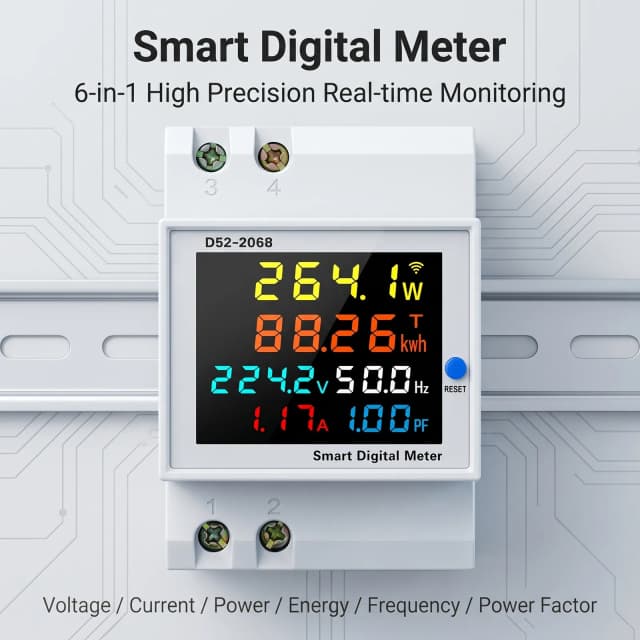
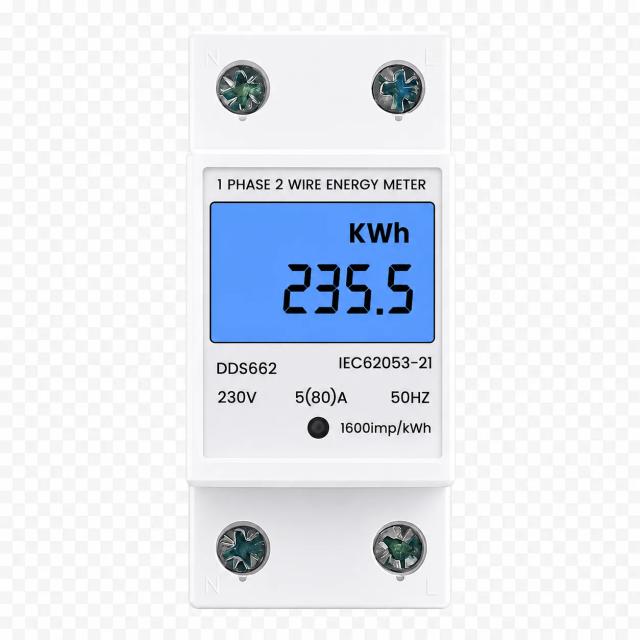
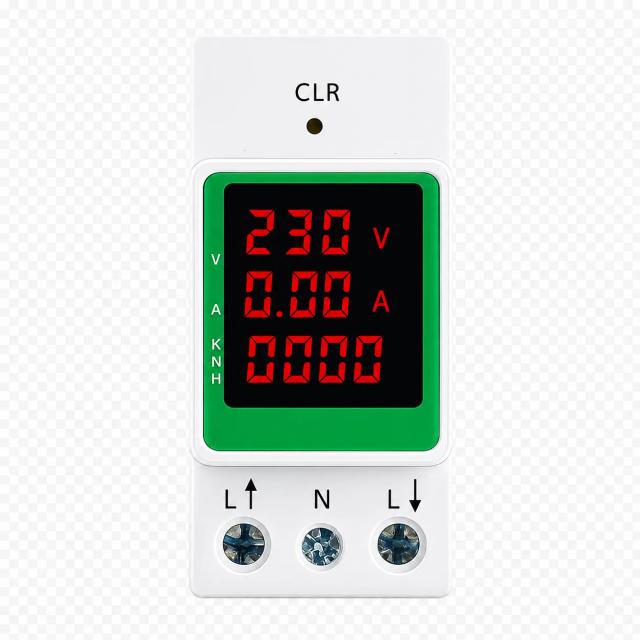
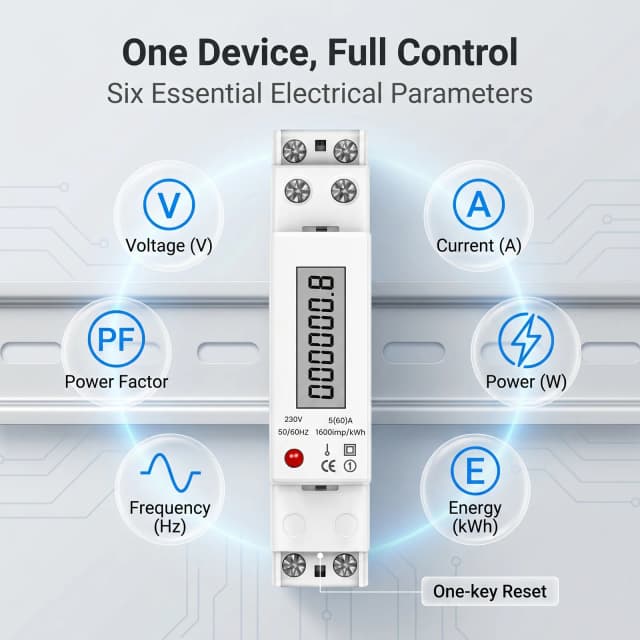
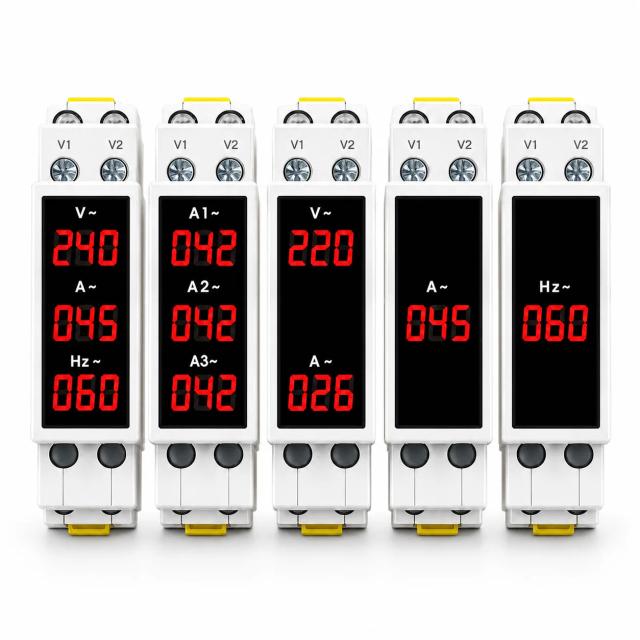
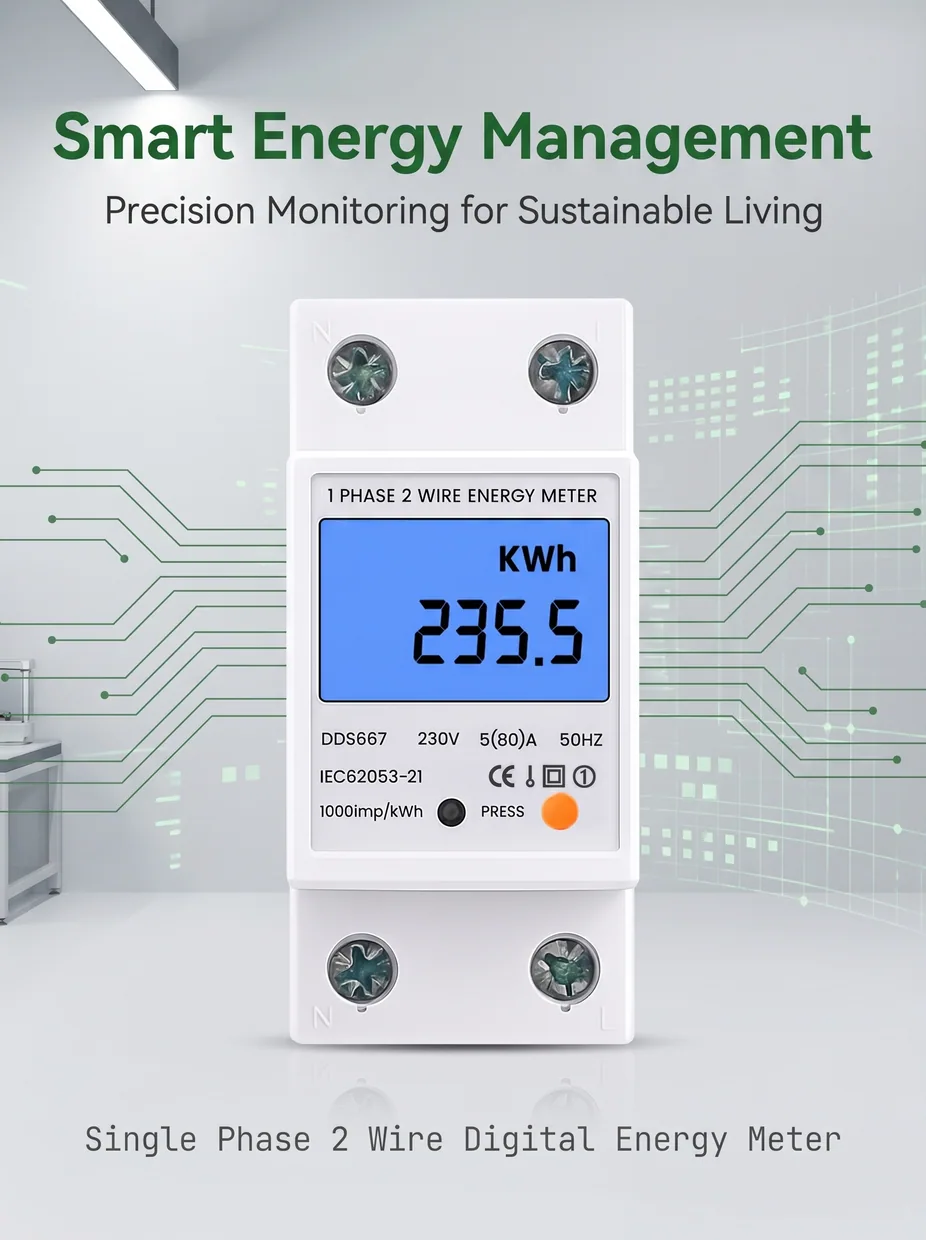
TPKELE DIN rail energy meters provide compact metering options for distribution panels and energy management projects.
Key Features
- Single-phase and three-phase options
- Clear digital display
- Communication model available
- Class 1 active energy accuracy
- Pulse output and RS485 Modbus options for monitoring
Need full datasheet, drawing or certificates for tender?
Typical Applications
Technical Specifications
| Phase | Single phase / Three phase |
|---|---|
| Rated Voltage | 230V / 400V AC |
| Rated Current | 5(80)A direct / CT operated |
| Accuracy Class | Class 1 (active energy) |
| Display | LCD digital display |
| Communication | Pulse output / RS485 Modbus (optional) |
| Mounting | DIN-rail 35mm |
| Conformity | CE marking |
| Standard | IEC 62052/62053 |
Certifications & Standards
Verified to international standards for global tenders
OEM / ODM Available
Private label this Energy Meter for your brand
Logo, color housing, packaging and certificate documentation tailored to distributor and brand-owner programs.
- Custom logo printing on housing and packaging
- Color housing variants for product line differentiation
- Private-label catalogs and datasheet customization
- Project-spec drawings, single-line diagrams and labels
- Container-load supply with export documentation
- Sample preparation within 5–10 working days
Frequently Asked Questions
Do you support Modbus communication?
Yes — RS485 Modbus output is available on selected models for integration with energy management, BMS and SCADA systems.
What accuracy class do the meters offer?
Standard meters meet Class 1 active energy accuracy per IEC 62053-21, suitable for sub-metering and operational monitoring. Higher accuracy available on request.
Direct connect vs CT operated — which do I need?
Direct-connect meters wire the load current directly through the meter, suitable up to 80A or 100A. CT-operated meters use external current transformers for higher currents (typically 100A and above).
Are the meters MID approved?
Standard models are CE / IEC certified. MID-approved versions for billing applications in the EU are available on request.
What is a DIN rail energy meter used for?
DIN rail energy meters measure active energy (kWh), current, voltage and power in distribution boards and sub-panels. Common applications include tenant sub-metering and billing, industrial energy monitoring for ISO 50001 compliance, solar self-consumption tracking, and building energy management integration. Single-phase meters suit residential and light commercial circuits; three-phase meters suit industrial equipment and commercial buildings.
What is the difference between direct-connect and CT-operated energy meters?
Direct-connect energy meters wire the load current directly through the meter terminals, suitable for circuits up to 80A or 100A depending on the model. CT-operated (current transformer) meters measure current indirectly via external CTs, suitable for higher currents (100A and above) or where the meter must be installed remotely from the load conductor. CT meters are common in three-phase industrial panels and main distribution boards.
Do TPKELE energy meters support Modbus communication?
Yes — selected TPKELE energy meter models include RS485 Modbus RTU output for integration with building management systems (BMS), SCADA platforms and energy management software. Modbus allows centralized monitoring of multiple meters, alarm notification and data logging. Pulse output versions (S0 pulse) are also available for simple event counting. Contact us with your project communication requirements for model recommendations.
What accuracy class do I need for an energy meter?
TPKELE DIN rail energy meters meet Class 1 active energy accuracy per IEC 62053-21, suitable for operational sub-metering, tenant billing (where local regulations permit) and energy monitoring. For legal billing applications in the EU, MID-approved meters are required — we offer MID versions on request. For ISO 50001 energy management and consumption analysis, Class 1 accuracy is sufficient.
Can I use an energy meter to monitor solar PV generation?
Yes — DIN rail energy meters are commonly installed on the AC output of solar inverters to measure generation (kWh produced) and on the grid connection point to measure import/export. For complete solar monitoring, combine energy meters with voltage protectors (to protect the inverter from grid voltage swings) and AC MCBs (for overcurrent protection). RS485 Modbus meters allow integration with solar monitoring platforms.
Need meters pre-assembled in a box? Build a metering board online.
Configure online →