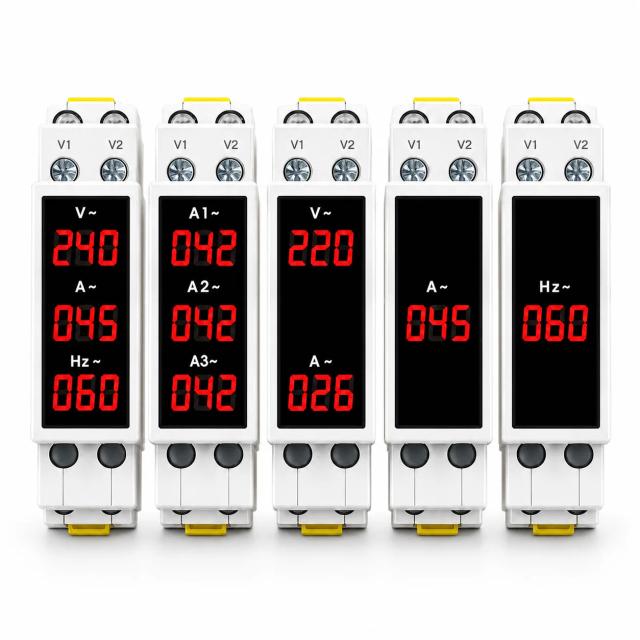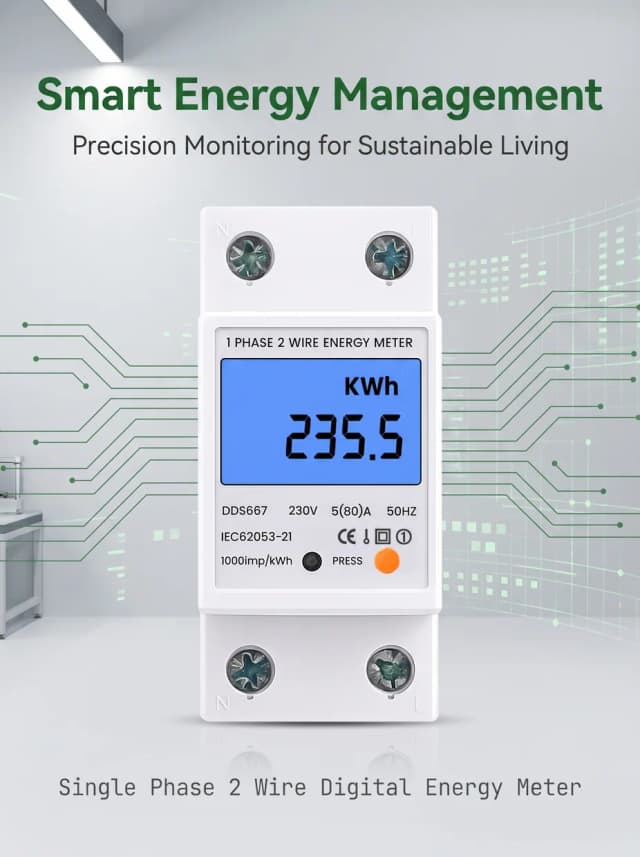
Energy Meter
DIN Rail Energy Meter Manufacturer — Single & Three Phase
TPKELE DIN-rail energy meters measure active energy, current and voltage for distribution boards, sub-metering and tenant billing. Single-phase and three-phase versions, direct-connect and CT-operated, pulse and RS485 Modbus output — designed to integrate with energy management platforms, BMS and SCADA systems for industrial and commercial customers.
- Single-phase and three-phase DIN-rail energy meters
- Direct-connect and CT-operated versions
- Class 1 active energy accuracy
Sub-metering in commercial buildingsTenant billing & landlord meteringIndustrial energy management & ISO 50001Solar self-consumption and feed-in meteringData center power monitoring
Specified by energy management integrators, panel builders, building contractors and distributors needing certified DIN-rail meters with Modbus integration.
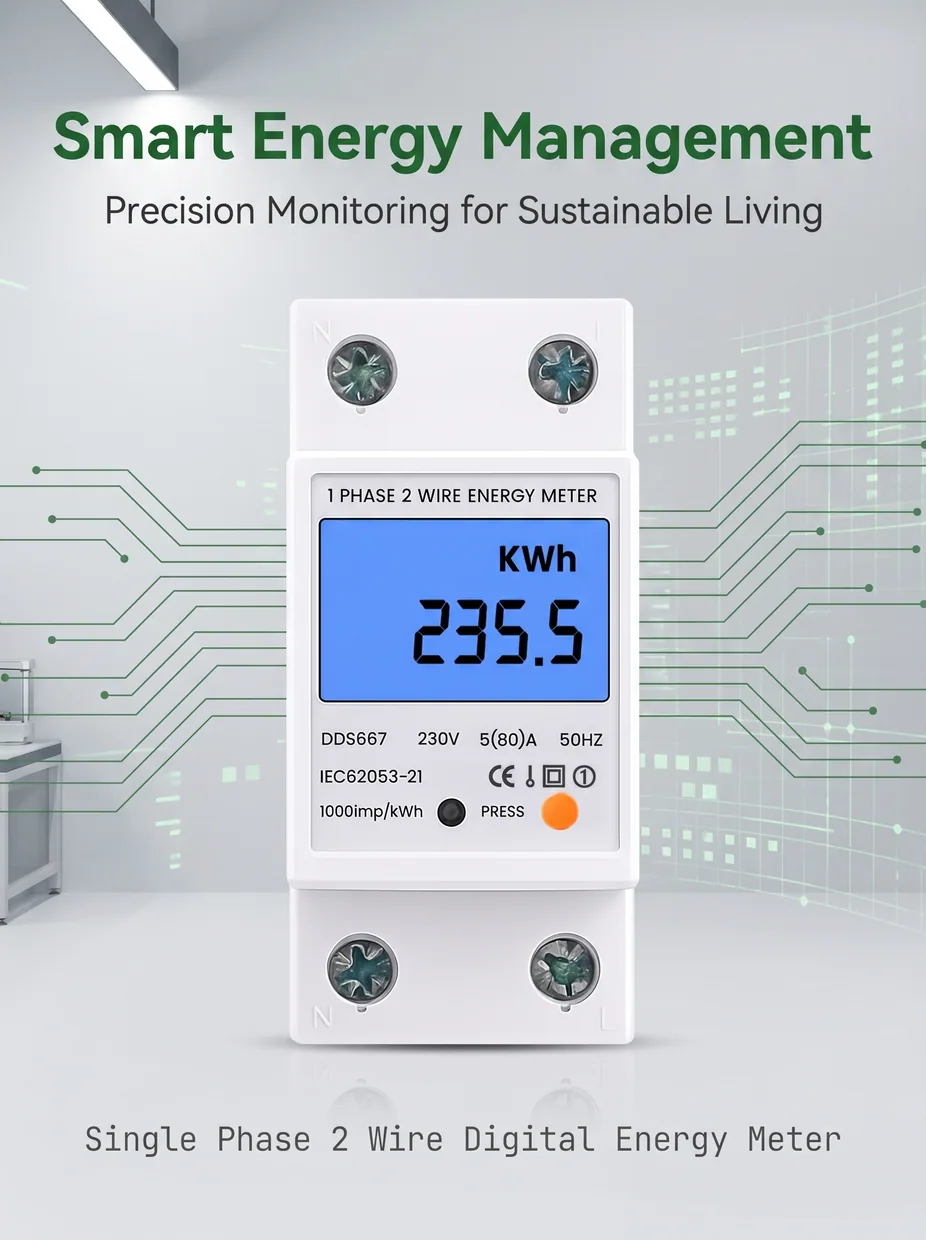
DIN Rail Energy Meter: Measure, Monitor and Manage Electrical Consumption
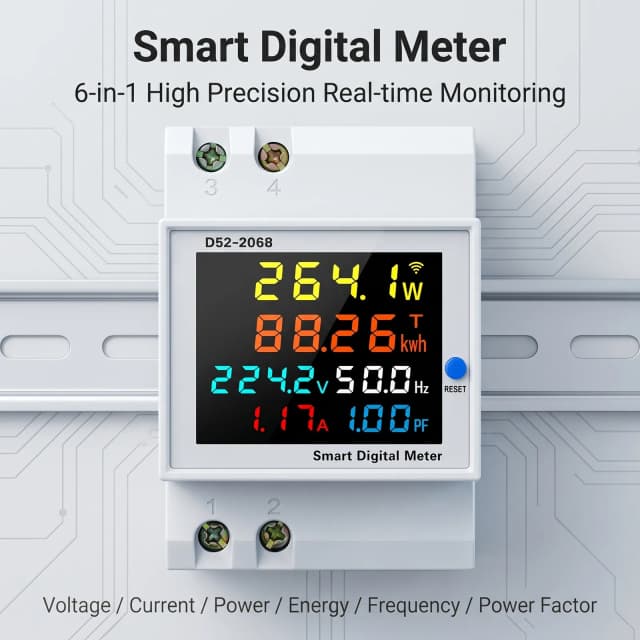
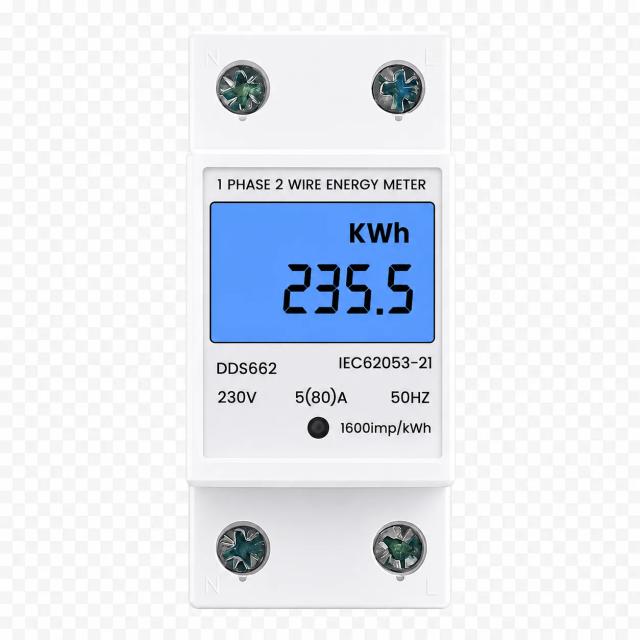
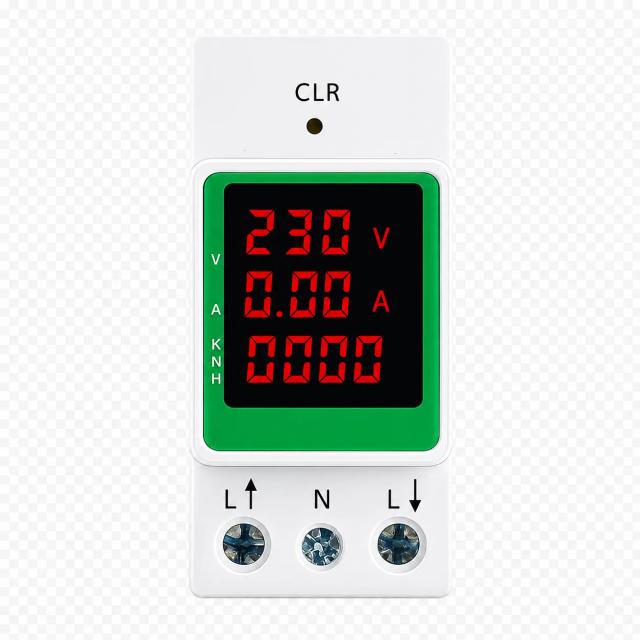
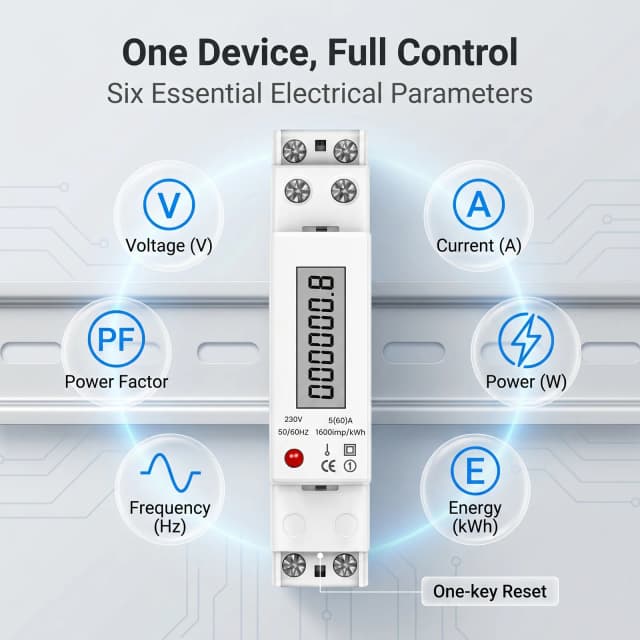
A DIN rail energy meter (also called a kWh meter or power meter) measures active energy consumption, current, voltage and power factor in distribution boards and sub-panels. Mounted on standard 35mm DIN rail, these meters provide the measurement foundation for tenant sub-metering and billing, industrial energy monitoring, solar self-consumption tracking and building energy management (BMS) integration.
TPKELE DIN rail energy meters are available in single-phase and three-phase configurations, direct-connect and CT-operated versions, with pulse output or RS485 Modbus communication for integration with SCADA, energy management software and IoT platforms. Class 1 active energy accuracy per IEC 62052-21 and IEC 62053-21 ensures reliable measurement for operational monitoring and tenant billing applications (where local regulations permit).
Why Install a DIN Rail Energy Meter?
Energy meters transform invisible consumption into visible, measurable data — the first step in managing energy cost and carbon footprint. Common applications include:
- Sub-metering in commercial buildings: Measure energy per tenant, department or floor for fair cost allocation. Energy meters installed on each tenant's distribution board enable accurate billing without estimated pro-rata splits.
- Industrial energy management: ISO 50001 and energy audits require measurement of significant energy uses (SEUs). Install energy meters on major equipment (chillers, compressors, production lines) to identify waste and verify savings after efficiency improvements.
- Solar PV generation monitoring: Measure solar inverter AC output (kWh generated) and grid connection point (kWh imported/exported). Energy meters with RS485 Modbus allow integration with solar monitoring platforms for real-time generation, self-consumption and feed-in tracking.
- Data center power monitoring: Measure per-rack or per-cabinet consumption for capacity planning, PUE calculation and tenant billing in colocation facilities.
- Building automation and BMS: RS485 Modbus energy meters integrate with building management systems (BMS) for centralized monitoring, alarm notification and energy dashboards.
Direct-Connect vs CT-Operated Energy Meters
Energy meters are available in two current measurement configurations:
Direct-connect meters (also called direct-wired or through-wired) pass the load current directly through the meter's terminals. This is the simpler and lower-cost option, suitable for circuits up to 80A or 100A depending on the model. The meter sits in series with the load, typically installed on the DIN rail adjacent to the branch circuit AC MCB. Common in residential, light commercial and small industrial applications.
CT-operated meters (current transformer operated) measure current indirectly via external CTs (e.g. 100A/5A, 200A/5A, 500A/5A). The meter receives a low-current signal (typically 5A secondary) proportional to the actual load current. This configuration is used for high-current circuits (above 100A), where passing full load current through the meter is impractical, or where the meter must be installed remotely from the load conductor for safety or accessibility. CT-operated meters are standard in three-phase industrial panels, main distribution boards and heavy equipment monitoring.
Selection tip: For branch circuits and sub-metering up to 63A–80A, choose direct-connect meters for simplicity. For main incomers, large equipment or retrofits where opening the conductor is difficult, choose CT-operated meters.
Communication Options: Pulse Output vs RS485 Modbus
Modern DIN rail energy meters offer communication outputs for remote monitoring and integration:
Pulse output (S0 pulse): A simple dry contact that closes once per unit of energy consumed (e.g. 1 pulse = 0.01 kWh or 1 Wh). The pulse output connects to a counter, PLC or BMS digital input for totalizing. Pulse output is passive, unidirectional and does not provide real-time power, voltage or current data — only cumulative energy. Suitable for basic energy logging and integration with older control systems.
RS485 Modbus RTU: A digital communication bus that allows one or more meters to be connected to a central controller, gateway or SCADA system. Modbus provides bi-directional communication: the controller can query the meter for real-time voltage, current, power, power factor, frequency and cumulative energy (kWh). Multiple meters (up to 32 or 247 depending on configuration) share one RS485 bus, each with a unique address. Modbus is the standard choice for building energy management, ISO 50001 monitoring and solar PV systems where detailed data and remote access are required.
For modern installations, RS485 Modbus meters offer the best flexibility and future-proofing. Pulse-output meters remain common in simple retrofit applications where only totalizing is needed.
Accuracy Class and MID Approval
Class 1 accuracy (per IEC 62053-21) is the standard for TPKELE DIN rail energy meters. Class 1 means ±1% measurement error under reference conditions, suitable for operational sub-metering, tenant billing (where local regulations permit Class 1) and energy monitoring for ISO 50001 or energy audits. For industrial energy management and consumption analysis, Class 1 accuracy is more than sufficient.
MID approval (Measuring Instruments Directive, EU 2014/32/EU) is required for legal billing applications in the European Union — tenant billing, landlord metering and any commercial transaction based on the meter reading. MID approval requires third-party type testing, production quality control and meter sealing. TPKELE offers MID-approved energy meters on request for EU projects where legal metrology compliance is required. For operational monitoring (not billing), standard Class 1 CE-marked meters are appropriate and lower cost.
Energy Meter Installation and Circuit Protection
Energy meters are installed on DIN rail inside distribution boards, typically adjacent to or downstream of the circuit's AC MCB. For direct-connect meters, the meter sits in series with the load: incoming supply connects to the meter input terminals, and the load connects to the meter output terminals. The meter must be protected by an upstream MCB sized to the cable and load.
For installations with automatic transfer switches (ATS), install the energy meter downstream of the ATS to measure total consumption regardless of source (mains or generator). To measure each source separately, install one meter on each ATS input.
In solar PV systems, install one energy meter on the inverter AC output (to measure generation) and a second meter at the grid connection point (to measure import/export). This two-meter layout is standard for net metering, feed-in tariff schemes and self-consumption monitoring. Combine with voltage protectors to protect the inverter from grid voltage swings.
How to Select the Right DIN Rail Energy Meter
When specifying an energy meter, confirm the following parameters:
- Phase configuration: Single-phase (230V AC, 1P+N) for residential and light commercial circuits; three-phase (400V AC, 3P+N or 3P) for industrial equipment and commercial building distribution.
- Current rating: Direct-connect meters are available in ratings like 5(80)A (5A reference current, 80A maximum). CT-operated meters use external CTs sized to the load (e.g. 100A/5A, 200A/5A, 500A/5A).
- Communication: Choose pulse output for simple energy totalizing, or RS485 Modbus for integration with BMS, SCADA or energy management platforms.
- Accuracy and approval: Class 1 for operational monitoring; MID-approved for legal tenant billing in the EU.
- Display: LCD digital display showing real-time kWh, voltage, current and power simplifies field inspection and commissioning.
Related Products for Complete Metering and Protection
Energy meters work as part of a complete distribution system:
Frequently Asked Questions
Do you support Modbus communication?
Yes — RS485 Modbus output is available on selected models for integration with energy management, BMS and SCADA systems.
What accuracy class do the meters offer?
Standard meters meet Class 1 active energy accuracy per IEC 62053-21, suitable for sub-metering and operational monitoring. Higher accuracy available on request.
Direct connect vs CT operated — which do I need?
Direct-connect meters wire the load current directly through the meter, suitable up to 80A or 100A. CT-operated meters use external current transformers for higher currents (typically 100A and above).
Are the meters MID approved?
Standard models are CE / IEC certified. MID-approved versions for billing applications in the EU are available on request.
What is a DIN rail energy meter used for?
DIN rail energy meters measure active energy (kWh), current, voltage and power in distribution boards and sub-panels. Common applications include tenant sub-metering and billing, industrial energy monitoring for ISO 50001 compliance, solar self-consumption tracking, and building energy management integration. Single-phase meters suit residential and light commercial circuits; three-phase meters suit industrial equipment and commercial buildings.
What is the difference between direct-connect and CT-operated energy meters?
Direct-connect energy meters wire the load current directly through the meter terminals, suitable for circuits up to 80A or 100A depending on the model. CT-operated (current transformer) meters measure current indirectly via external CTs, suitable for higher currents (100A and above) or where the meter must be installed remotely from the load conductor. CT meters are common in three-phase industrial panels and main distribution boards.
Do TPKELE energy meters support Modbus communication?
Yes — selected TPKELE energy meter models include RS485 Modbus RTU output for integration with building management systems (BMS), SCADA platforms and energy management software. Modbus allows centralized monitoring of multiple meters, alarm notification and data logging. Pulse output versions (S0 pulse) are also available for simple event counting. Contact us with your project communication requirements for model recommendations.
What accuracy class do I need for an energy meter?
TPKELE DIN rail energy meters meet Class 1 active energy accuracy per IEC 62053-21, suitable for operational sub-metering, tenant billing (where local regulations permit) and energy monitoring. For legal billing applications in the EU, MID-approved meters are required — we offer MID versions on request. For ISO 50001 energy management and consumption analysis, Class 1 accuracy is sufficient.
Can I use an energy meter to monitor solar PV generation?
Yes — DIN rail energy meters are commonly installed on the AC output of solar inverters to measure generation (kWh produced) and on the grid connection point to measure import/export. For complete solar monitoring, combine energy meters with voltage protectors (to protect the inverter from grid voltage swings) and AC MCBs (for overcurrent protection). RS485 Modbus meters allow integration with solar monitoring platforms.