MCB / AC MCB
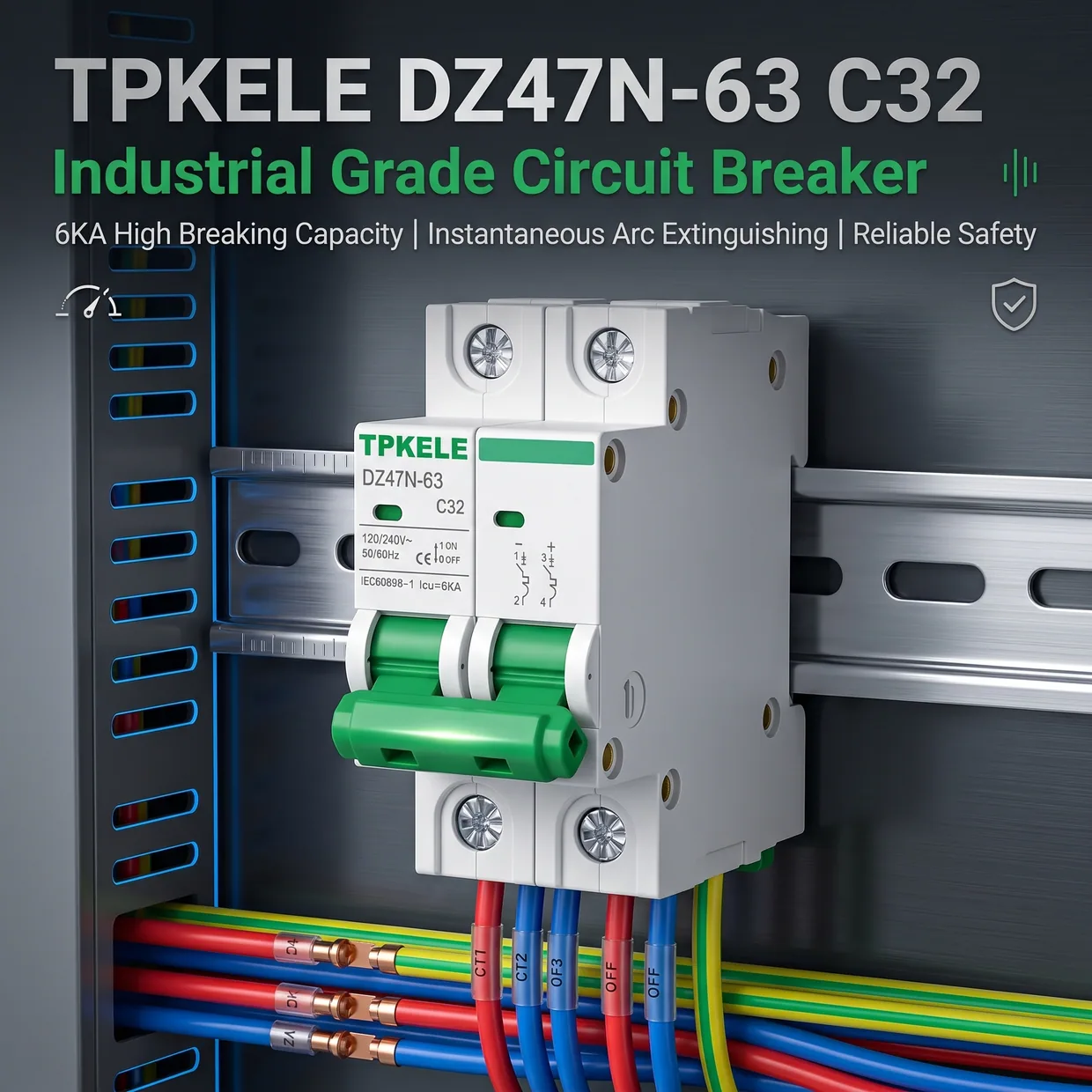
AC MCB 2P
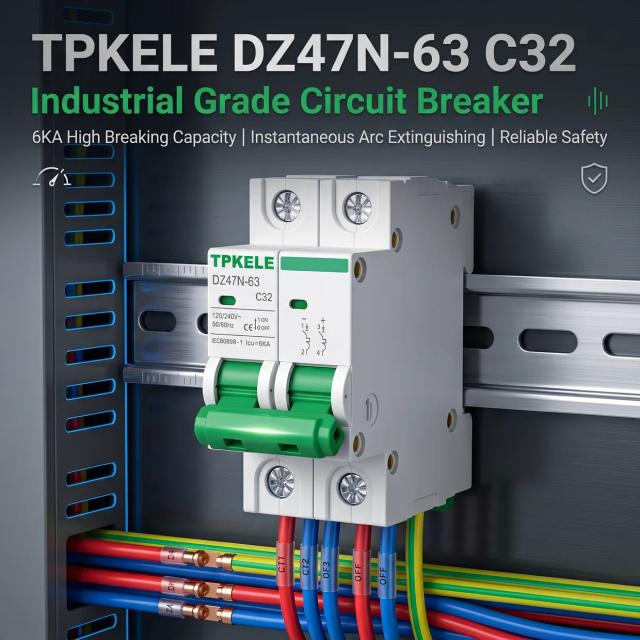
TPKELE AC MCB 2P is a two-pole AC miniature circuit breaker designed for line and neutral protection in single phase circuits and small AC distribution boards.
Key Features
- 2 Pole AC
- Line + neutral protection
- DIN rail mount
- OEM logo and packaging available
- CE & RoHS certified – accepted in EU, UK, and global markets
Need full datasheet, drawing or certificates for tender?
Typical Applications
AC MCB Technical Parameters
| No. | Parameter Category | Key Specifications |
|---|---|---|
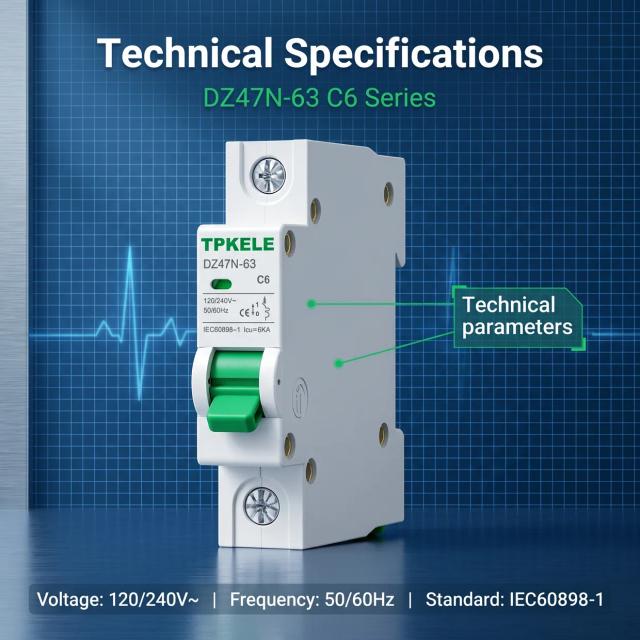
| 01 | Core Electrical Ratings | Rated Current: 1A–125A | Rated Voltage: AC 230V (1P) / 400V (2P / 3P / 4P)Poles: 1P / 1P+N / 2P / 3P / 3P+N / 4P | Breaking Capacity: 4.5kA / 6kA / 10kARated Insulation Voltage (Ui): 500V | Rated Impulse Withstand Voltage (Uimp): 4kV / 6kVFrequency: 50 / 60 Hz |
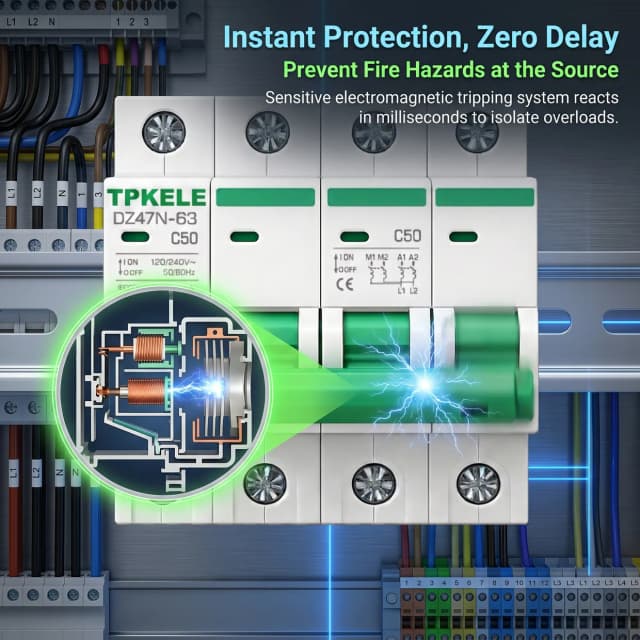
| 02 | Trip & Protection Characteristics | Protection Types: Overload Protection and Short Circuit ProtectionTrip Curves: B Curve (3–5×In), C Curve (5–10×In), D Curve (10–20×In)Typical Use: B Curve for resistive & lighting loads, C Curve for general distribution, D Curve for inductive & motor loads |
| 03 | Voltage & Pole Configuration | 1P: AC 230V | 2P: AC 230V / 400V3P: AC 400V | 4P: AC 400VAC arcs self-extinguish at current zero crossing — no special DC arc chamber required |
| 04 | Mechanical & Installation Data | Mounting: 35mm DIN Rail | Cable Capacity: 1–25mm² / 1–35mm²Terminal Torque: typically 2.0–3.0 N·m | Mechanical Life: 20,000 cyclesElectrical Life: 6,000–10,000 cycles | Protection Degree: IP20Ambient Temperature: -25°C to +55°C (reference temperature 30°C) |
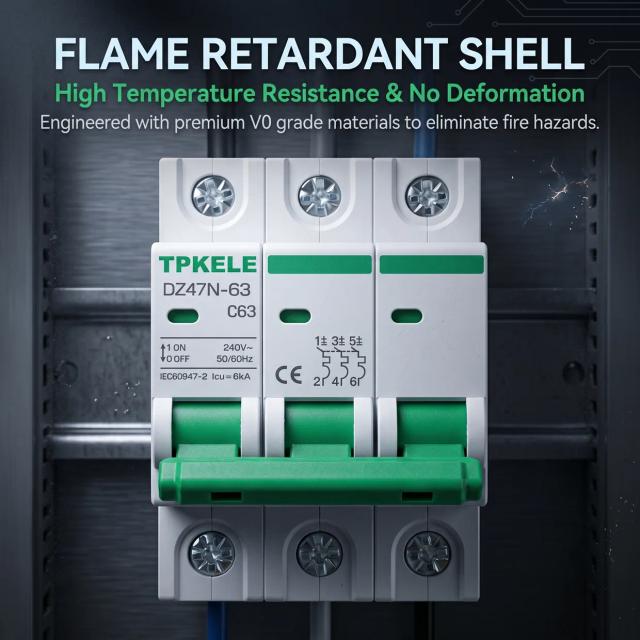
| 05 | Materials & Safety Features | Housing Material: Flame-retardant PA66, typically UL94 V-0 | Contact Material: Silver AlloyArc Extinguishing: Arc chamber with splitter plates | Polarity: non-polarized, bidirectionalStatus Indication: red/green window | Isolation Function: positive contact indication |
| 06 | Standards & Applications | Standards: IEC 60898-1, EN 60898-1, IEC 60947-2 (industrial)Applications: Residential & commercial distribution boards, lighting and socket circuits, AC motor protection, control panels, sub-distribution |
Mechanical & Installation Parameters
| Parameter | Common Requirement |
|---|---|
| Mounting | 35mm DIN rail |
| Terminal | Top & bottom wiring, copper wire / busbar connection |
| Cable Capacity | 1–25mm² / 1–35mm² |
| Torque | 2.0–3.0 N·m, depends on model |
| Mechanical Life | 20,000 cycles |
| Electrical Life | 6,000–10,000 cycles |
| Protection Degree | IP20 (typical) |
| Ambient Temperature | -25°C to +55°C (reference temperature 30°C) |
Materials & Safety Parameters
| Parameter | Common Requirement |
|---|---|
| Housing Material | Flame-retardant nylon / PA66, typically UL94 V-0 |
| Contact Material | Silver alloy contacts preferred |
| Arc Extinguishing System | Arc chamber with splitter plates; AC arcs self-extinguish at current zero crossing |
| Polarity | Non-polarized, bidirectional; wiring direction not restricted |
| Indicator | Red / green status indication window |
| Isolation Function | Some models can be used as an isolation switch |
Certifications & Standards
Verified to international standards for global tenders
OEM / ODM Available
Private label this MCB for your brand
Logo, color housing, packaging and certificate documentation tailored to distributor and brand-owner programs.
- Custom logo printing on housing and packaging
- Color housing variants for product line differentiation
- Private-label catalogs and datasheet customization
- Project-spec drawings, single-line diagrams and labels
- Container-load supply with export documentation
- Sample preparation within 5–10 working days
Frequently Asked Questions
What is the difference between AC MCB and DC MCB?
AC MCBs are designed for alternating current circuits — the AC zero-crossing helps extinguish arcs naturally. DC MCBs handle direct current with no zero-crossing, requiring specialized arc-quenching contact structures and magnets. Solar PV strings, batteries and DC bus systems must use DC MCBs rated for the system Uoc.
What system voltages do your DC MCBs cover?
Standard DC MCBs cover up to 1000V DC; for utility-scale PV we offer up to 1500V DC versions using 3P / 4P series configuration.
Which curve should I choose — B, C or D?
B curve (3–5 In) for resistive loads, C curve (5–10 In) for general-purpose distribution and mixed loads, D curve (10–20 In) for inductive loads with high inrush currents like motors and transformers.
Do you support OEM branding for MCBs?
Yes — logo printing, custom housing color, dedicated packaging and private-label catalogs are supported for distributor and brand-owner programs.
Do your MCBs carry CE certification?
Yes, TPKELE MCBs are CE & RoHS compliant. AC models are tested per IEC 60898-1; DC models per IEC 60947-2. Test reports are available for project tenders and customs documentation.
How do I coordinate MCB with SPD and voltage protector in a distribution board?
Standard protection layout from upstream to downstream: (1) Main incomer AC MCB (80A–125A), (2) AC SPD Type 2 at incoming supply for surge protection, (3) Branch AC MCBs (6A–63A) for each circuit, (4) Voltage protectors on sensitive circuits downstream of branch MCBs. This sequence provides short-circuit protection (MCB), transient surge protection (SPD) and sustained voltage quality protection (voltage protector). For circuit-level earth leakage protection, use RCBOs instead of MCBs. View our AC SPD and voltage protector series.
What is the difference between AC MCB breaking capacity 6kA and 10kA?
Breaking capacity (Icn or Icu) is the maximum short-circuit current the MCB can safely interrupt. 6kA breaking capacity is standard for residential and light commercial distribution where fault current is limited by upstream impedance. 10kA is specified for commercial, industrial and high-rise buildings where higher fault currents are possible. Check the prospective short-circuit current (Isc) at the point of installation — the MCB breaking capacity must exceed Isc. When in doubt, 10kA models provide greater safety margin with minimal cost difference.
Can I use AC MCB for DC circuits or DC MCB for AC circuits?
No — AC and DC circuit breakers are not interchangeable. AC MCBs rely on the AC current zero-crossing to extinguish arcs; DC has no zero-crossing and requires specialized arc-quenching chambers and magnetic blowout. Using an AC MCB on a DC circuit (such as solar PV or battery) can result in failure to interrupt fault current, arc flash and fire hazard. Always use DC-rated MCBs for DC applications. AC MCBs are suitable only for AC distribution. View our DC MCB series for solar and battery applications.
Applications
Where This Product Is Used
AC Distribution Box
Inverter AC output and feeder boxes built with TPKELE AC MCBs and 4P SPDs.
→Project: Mongolia Solar + Storage
11 AC distribution boxes with a 4P breaker and 4P SPD on every inverter output.
→Custom Distribution Boxes
Send your single-line diagram; we propose the layout and bill of materials.
→Need it pre-assembled? Build an AC box with this component online.
Configure online →